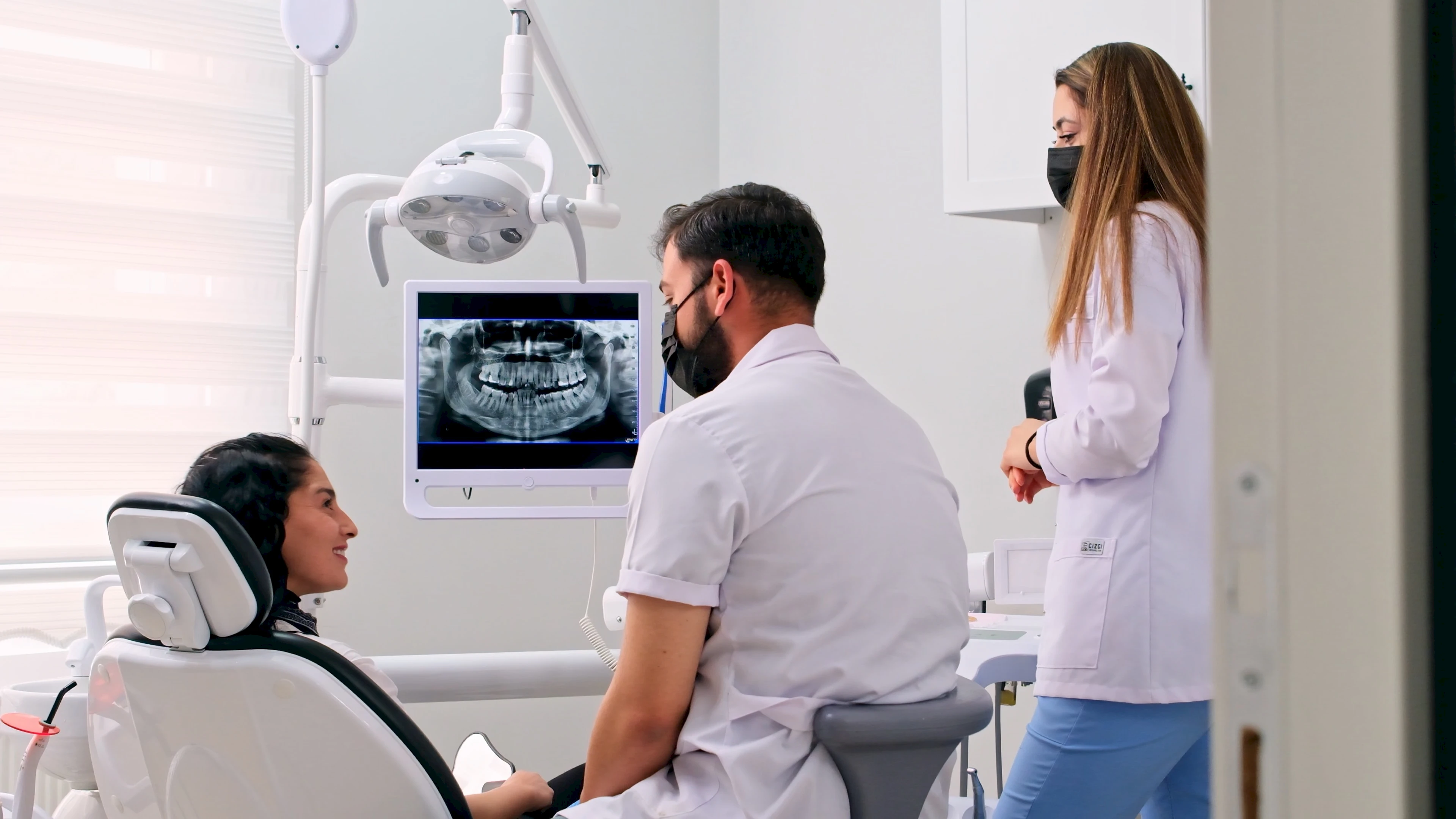
Gum Disease Treatment
Gum treatment stops the disease that destroys the tissue and bone holding your teeth. Gingivitis is fully reversible; the bone lost in periodontitis is not - which is why bleeding gums are examined rather than waited out.
What Is Gum Treatment?
Gum treatment addresses the disease that destroys the tissue and bone holding your teeth in place. It begins as gingivitis - inflammation confined to the gum, entirely reversible - and progresses to periodontitis, in which the attachment between gum and root breaks down, pockets form, and the bone around the tooth is lost. Bone lost to periodontitis does not grow back on its own.
This matters more than most patients are told. Periodontitis is the leading cause of tooth loss in adults - ahead of decay - and because it is usually painless, people discover it when teeth start to move, not when it starts. It is also the reason a cosmetic plan sometimes has to wait: veneers or implants placed into diseased gums fail, and no amount of ceramic compensates for a failing foundation.
Signs of Gum Disease
- Bleeding when brushing or flossing. The single most reliable early sign, and the one most often dismissed. Healthy gums do not bleed.
- Red, swollen or tender gums instead of firm and pale pink.
- Persistent bad breath or a bad taste that returns within hours of brushing.
- Receding gums - teeth that look longer than they used to, or sensitivity at the neck of the tooth.
- Teeth that have moved, gaps that have appeared, or a bite that feels different.
- Loose teeth, or pus at the gum margin. These are late signs.
You can have significant periodontitis with none of the dramatic symptoms. That is why the pocket depths around every tooth are measured at examination rather than estimated by eye.
Stages of Gum Disease
| Stage | What is happening | Pocket depth | Treatment |
|---|---|---|---|
| Gingivitis | Inflammation of the gum only; no bone loss | Up to 3 mm | Professional cleaning and improved home care - fully reversible |
| Early periodontitis | Attachment loss begins, bone starts to be affected | 4-5 mm | Deep cleaning below the gum (root surface debridement) |
| Moderate periodontitis | Clear bone loss, gums recede, teeth may be sensitive | 5-7 mm | Deep cleaning by quadrant, sometimes with local antimicrobials |
| Advanced periodontitis | Substantial bone loss, mobility, teeth may drift | Over 7 mm | Flap surgery, regenerative procedures, or extraction of hopeless teeth |
What Is Root Surface Debridement (Curettage)?
It is the deep cleaning of the root surfaces below the gum line - what patients usually call curettage or deep scaling. Ordinary scaling removes deposits you can see, above the gum. Once a pocket has formed, hardened deposits sit on the root surface inside it, where no toothbrush reaches and where they hold the inflammation open. Removing them, and smoothing the root so that the gum can reattach, is the core of non-surgical periodontal treatment.
It is not a cosmetic clean. It is the treatment that stops the bone loss.
How Is It Done?
- Charting. Pocket depths are measured at six points around every tooth and recorded, with radiographs to show the bone level. This chart is the baseline against which the result is judged.
- Local anaesthetic. The area treated is numbed. Deep cleaning without anaesthetic is uncomfortable and, more importantly, tends to be incomplete because the patient cannot tolerate thorough work.
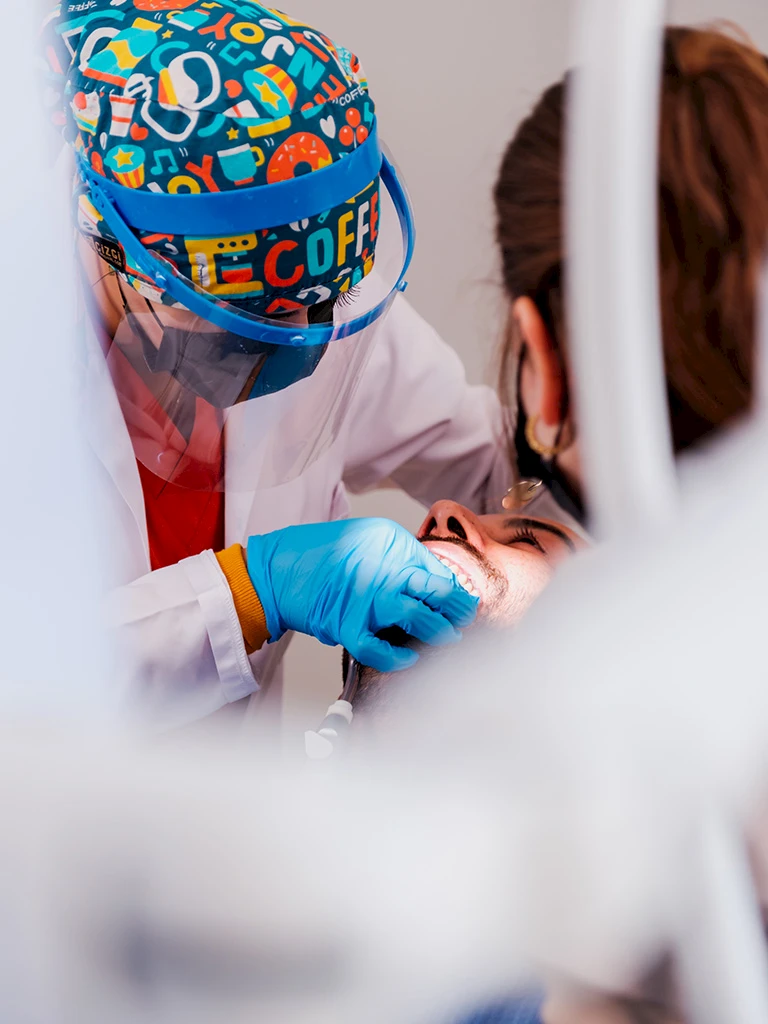
- Debridement. Ultrasonic instruments and fine hand curettes remove calculus and infected deposits from the root surfaces and smooth them.
- By quadrant. The mouth is usually treated in two to four sessions rather than all at once, so each area is done properly.
- Re-evaluation. Six to eight weeks later the pockets are measured again. Where they have closed, you move to maintenance; where they have not, further treatment is planned. Without this re-measurement nobody can tell you whether the treatment worked.
Scaling or Deep Cleaning - Which Do I Need?
Scaling above the gum treats gingivitis and prevents disease; it is what a routine hygiene appointment is. Deep cleaning below the gum treats periodontitis, requires anaesthetic, takes longer, and is planned by quadrant. The difference is not the level of thoroughness - it is what the measured pocket depths say. If your gums bleed and you have been having a routine clean for years without the pockets ever being charted, ask for the chart.
Does It Hurt?
Not during, under local anaesthetic. For a few days afterwards the teeth are often sensitive to cold and the gums are tender - that is normal and settles. A desensitising toothpaste helps, and we can apply a fluoride varnish for the same reason.
One honest warning: as inflammation resolves, swollen gum tissue shrinks back to its healthy size, so gaps may appear between teeth that were previously hidden by puffy gum, and teeth can look longer. That is healing revealing the true bone level, not the treatment causing damage - but you should be told about it beforehand rather than discovering it in the mirror.
After Gum Treatment
- Brush gently but do not stop brushing the treated area. Bacterial plaque re-forms within hours, and the treatment fails without daily disruption of it.
- Use the prescribed mouthrinse for the period stated, not indefinitely - chlorhexidine stains teeth with long-term use.
- Expect sensitivity to cold for a week or two.
- Soft food for the first day or two if the gums are tender.
- Stop smoking, if you can. Smoking is the strongest modifiable risk factor in periodontitis; it constricts the blood supply, masks the bleeding that would have warned you, and roughly doubles the rate of attachment loss. Treatment in a smoker responds measurably less well.
- Come to the re-evaluation. The appointment that measures whether it worked is the one people skip.
Does Gum Recession Come Back?
Gum that has receded does not regrow by itself, and no toothpaste or rinse reverses it. What treatment does is stop it progressing - which is the important part, because recession that keeps advancing ends in tooth loss.
Where an individual recession is causing sensitivity, an aesthetic problem or continuing loss, it can be covered surgically with a connective tissue graft, and the results in suitable cases are good and stable. That is a separate, planned procedure, and it is only worth doing once the underlying inflammation is controlled and the cause - often aggressive brushing with a hard brush, or a thin biotype under orthodontic movement - has been addressed.
When Is Flap Surgery Needed?
When pockets remain deeper than about six millimetres after non-surgical treatment, instruments can no longer reach the base of the pocket reliably. Flap surgery lifts the gum, allows the root surfaces and bone defects to be cleaned under direct vision, and where the defect shape allows, bone graft material and a membrane can be placed to regenerate lost support.
It is planned after the non-surgical phase, never before it - a mouth that is still inflamed and heavily plaque-covered is not a mouth to operate in.
What Happens If Gum Disease Is Not Treated?
Bone loss continues silently. Pockets deepen, teeth loosen and drift, gaps open between front teeth, chewing becomes uncomfortable, and eventually teeth are lost - often several at a time, and often the ones that matter most for chewing. Replacing them then becomes harder and more expensive precisely because the bone that an implant would need has already gone.
There is also the wider picture, which we state carefully because the evidence is about association rather than proof of cause: periodontitis is consistently associated with cardiovascular disease, poorly controlled diabetes and adverse pregnancy outcomes, and treating it improves glycaemic control in diabetic patients. Chronic inflammation in the mouth is not sealed off from the rest of the body.
Care After Gum Treatment
Periodontitis is controlled, not cured. What keeps it controlled is unglamorous and daily: brushing twice with a soft brush at the gum margin, cleaning between the teeth every day with interdental brushes sized to your spaces rather than floss alone, and maintenance appointments every three to four months rather than every six. Patients on a proper maintenance programme keep their teeth at rates far higher than those who are treated once and discharged. That is the whole of the evidence in one sentence.
Gum Treatment for Visiting Patients
Periodontal treatment is one of the treatments we most often tell international patients to complete at home, and we would rather say that than sell you a package. It is delivered in quadrants over several weeks, and it needs re-measurement at six to eight weeks and maintenance every three to four months - a rhythm that does not fit a single trip.
What does work: if you are here for implants, crowns or veneers, the gum condition is assessed and treated first, because none of those treatments succeeds on an inflamed foundation. Where the disease is limited, treatment can be completed during your stay; where it is advanced, we will tell you honestly that the restorative plan needs to wait, and we will send your chart and radiographs to your dentist at home so the periodontal care continues there.
Why We Do Not Publish Gum Treatment Prices
Because the treatment is priced by how many quadrants need deep cleaning, whether surgery is required and how many maintenance visits follow - none of which is known before the pockets are charted. A clinic that quotes a single price for "gum treatment" before measuring is quoting for a hygiene appointment, whatever it is called. After the examination you receive a written plan by quadrant, including the re-evaluation.
Gum Treatment in Kusadasi
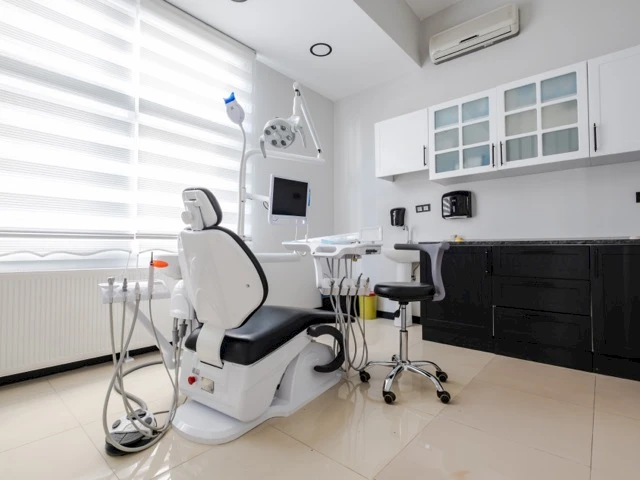
Our clinic is in Cumhuriyet Mahallesi in Kusadasi, with five treatment units and radiographic equipment on site, so pocket charting and bone assessment happen in the same appointment. The clinic is authorised by the Turkish Ministry of Health, and your first examination is carried out by Tugce Arslan.
If your gums bleed when you brush, that is the moment to have them examined - not when a tooth becomes loose. Gingivitis is fully reversible; the bone lost in the stage after it is not.
The information on this page is general and does not replace a clinical examination. The stage of gum disease and the treatment it requires can only be determined after examination and radiographic assessment.
Gum Disease Treatment
Can gum disease be treated at home - do natural remedies work
Salt-water rinses, clove, propolis and herbal mouthwashes can ease the symptoms - the bleeding lessens and the discomfort settles. None of them dissolves calculus. The cause of the disease is a hardened bacterial deposit on the root surface, and while that deposit stays where it is, the inflammation returns. That is precisely the risk of home remedies: the symptoms fade, the patient believes the problem is solved, and the bone loss continues silently. What does work at home is the daily part - brushing at the gum margin with a soft brush and cleaning between the teeth every day. The deposit itself has to be removed with an instrument.
How do you stop bleeding gums
With an answer most people find surprising: you do not stop brushing the area that bleeds - you keep brushing it. The bleeding is not caused by the brush but by the bacterial film at the gum margin; once cleaning is maintained, the inflammation subsides and in most cases the bleeding decreases within a few days. Use a soft brush, angle it at 45 degrees to the gum margin and work without pressure. Interdental cleaning may also bleed in the first days, and that too settles. Bleeding that persists beyond two weeks of proper daily cleaning is not a hygiene problem any more and needs examining.
Is gum disease contagious - can I pass it to my partner
The bacteria involved can be transmitted through saliva, so sharing cutlery, toothbrushes or kissing does transfer them. But transmission alone does not cause the disease. Whether periodontitis develops depends on the individual immune response, smoking, diabetes, genetics and above all on daily cleaning - which is why partners with the same bacteria often have very different gum health. There is no reason to avoid contact. There is a good reason for both partners to be examined if one has been diagnosed, since the risk factors are frequently shared as well.
I have diabetes - can I have gum treatment
Not only can you, you should. The relationship runs in both directions: poorly controlled blood sugar worsens gum disease, and untreated gum disease measurably worsens glycaemic control. Treating the gums improves both. What changes practically is the planning - your HbA1c and current medication are asked about, appointments are scheduled so you do not attend fasting, and healing is monitored more closely because it can be slower. Where blood sugar is very poorly controlled, elective surgery is postponed until it is stabilised, but non-surgical treatment is not.
Are antibiotics used in gum treatment
Not routinely, and that is deliberate. Periodontitis is caused by a bacterial biofilm attached to the root surface, and antibiotics do not penetrate biofilm reliably - the deposit has to be removed mechanically. Prescribing antibiotics instead of cleaning the root surfaces relieves symptoms briefly and changes nothing about the disease.
My teeth feel more sensitive during treatment - is that expected
Yes, and it usually means the treatment is working. As inflammation resolves, swollen gum tissue shrinks back to its healthy size, and root surfaces that were covered by that swelling become exposed - so cold sensitivity increases for a while. A desensitising toothpaste used consistently, and fluoride varnish where needed, cover the period until it settles, which is typically two to six weeks.
Which toothbrush and toothpaste should I use for receding gums
A soft brush, always - medium and hard bristles are among the main causes of recession, not the cure for it. Technique matters more than the brush: angle the bristles towards the gum margin and use light pressure, and if you use an electric brush, let it do the work rather than pressing. For toothpaste, choose a low-abrasivity formulation with fluoride, and a desensitising one if exposed roots are painful. What to avoid: whitening pastes, charcoal pastes and anything marketed as strongly cleaning - they work by abrasion and thin the exposed root surface further.
Is my bad breath coming from my gums
Very possibly. Periodontal pockets are oxygen-poor spaces where exactly the bacteria that produce volatile sulphur compounds thrive, and bad breath with bleeding gums is periodontitis until proven otherwise. The other common oral source is the coating on the back of the tongue. A practical test: clean your tongue with a scraper for a few days and see whether the smell changes. If it does not, and your gums bleed, the pockets are the likely source - and treating them resolves the smell rather than masking it.
My gums are swollen and bleeding during pregnancy - is that normal
It is common. Hormonal changes make the gum tissue react more strongly to the same amount of plaque, and pregnancy gingivitis affects a large proportion of pregnancies, typically from the second month onwards. Common does not mean it should be left: untreated inflammation progresses, and periodontitis in pregnancy is associated with adverse outcomes. Cleaning and non-surgical treatment are safe during pregnancy - the second trimester is the most comfortable window - and daily interdental cleaning matters more now than at any other time. A single swelling that grows and bleeds easily may be a pregnancy granuloma, which is harmless and usually resolves after birth, but should be looked at rather than assumed.
Can someone with gum disease have implants
Not while the disease is active, and that is not a formality. The same bacteria that destroyed bone around the teeth colonise an implant surface, and peri-implantitis in a patient with untreated periodontitis is substantially more likely - an implant placed into an inflamed mouth is an expensive way to lose bone. The sequence is: treat the gums, re-measure the pockets at six to eight weeks, and place implants once the disease is controlled. After that, a treated periodontitis patient can have implants successfully, provided they stay on three to four monthly maintenance. Any clinic that offers you implants without charting your pockets first is not planning for the years after.
We are on holiday in Kusadasi - can gum treatment be completed during our stay
Partly, and we would rather say so than sell you a package. Examination, pocket charting and a professional cleaning fit into one appointment. Deep cleaning of one or two quadrants can be done during a stay of several days. What does not fit is the whole course: treatment runs quadrant by quadrant over weeks, needs re-measurement at six to eight weeks and maintenance every three to four months. What we do is treat what is urgent, give you the pocket chart and radiographs in writing, and send them to your dentist at home so the course continues there.
Is gum treatment covered by health insurance
In most European systems, treatment of gum disease is classed as necessary rather than elective, so statutory cover contributes - but the extent varies widely, and several systems require a documented pocket chart and prior approval before deeper treatment is authorised. Supplementary dental policies often cover a further share, and some exclude periodontal surgery specifically. Ask your insurer in writing before you commit, and ask them what documentation they need. We provide a pocket chart, radiographs and an itemised written plan as a matter of course, which is what a claim is normally assessed on.