Paediatric Dentistry

Paediatric dentistry is not adult dentistry made smaller: enamel is thinner, decay moves faster, and the jaws are still growing. The first visit should happen by the first birthday - before anything hurts.

Medically reviewed by Dentist Tuğçe Arslan Founding Dentist

What Is Paediatric Dentistry?

Paediatric dentistry looks after children's teeth from the arrival of the first one to the end of adolescence. It is not simply dentistry done smaller. A child's teeth have thinner enamel and a proportionally larger pulp, so decay spreads faster and reaches the nerve sooner; the jaws are growing, so what happens to a baby tooth affects the permanent tooth forming above it; and the way a child is treated at five determines whether they are a patient or an avoider at thirty-five.

That last part is the work nobody bills for and everything depends on. A first visit that is unhurried, explained and painless is worth more to a child's long-term dental health than any single filling.

When Should a Child First See a Dentist?

Within six months of the first tooth appearing, and no later than the first birthday. That surprises most parents, because there is usually nothing to treat - and that is precisely the point. The first visit is a look, a count, a check of how the teeth are coming through, and a conversation about bottles, night feeds, brushing and fluoride.

Children who meet a dentist before anything hurts learn that the chair is an ordinary place. Children whose first visit happens because of toothache learn something else, and it lasts.

Up to What Age?

Until the permanent dentition is complete and growth has finished - in practice into the late teens. There is no single day on which a child becomes an adult patient; the transition happens naturally as treatment needs change. Adolescence brings its own pattern of problems: decay from soft drinks and irregular brushing, sports injuries to front teeth, wisdom teeth arriving, and orthodontic timing.

When Do Baby Teeth Come and Go?

ToothEruptsFalls out
Lower central incisors6-10 months6-7 years
Upper central incisors8-12 months6-7 years
Lateral incisors9-16 months7-8 years
First molars13-19 months9-11 years
Canines16-23 months10-12 years
Second molars23-33 months10-12 years

Timing varies widely and being a few months either side of these ranges is normal. What is worth asking about is a marked asymmetry - one side erupting long before the other - or no teeth at all by around eighteen months.

One point parents rarely hear: the first permanent molars arrive at about six years old, behind the baby teeth, without any tooth falling out first. Many parents do not realise these are permanent, and they are among the most commonly neglected teeth in the mouth.

Do Baby Teeth With Decay Need Treating?

Yes, and the belief that they do not is the single most damaging misconception in children's dentistry. "It will fall out anyway" ignores four things: a decayed baby tooth hurts, and children in dental pain sleep badly, eat badly and concentrate badly; infection at the root of a baby tooth can damage the permanent tooth developing directly above it; baby molars are not lost until ten to twelve years old, which is a long time to live with an untreated cavity; and a tooth lost early lets the neighbours drift into the space, so the permanent tooth arrives to find no room.

Decay in children is also faster than in adults. A cavity that would take two years to progress in an adult tooth can reach the nerve in months in a baby molar.

Bottle Decay

Early childhood caries - bottle decay - typically affects the upper front teeth first, appearing as chalky white bands near the gum that turn brown and crumble. The cause is prolonged contact between sugary liquid and teeth: a bottle in bed, a sipper cup carried all day, breastfeeding on demand through the night after teeth have arrived, or a dummy dipped in anything sweet.

Prevention is straightforward and worth stating plainly: nothing but water in the bottle at night, no bottle in bed once teeth are present, move to an open cup from around twelve months, and wipe or brush the teeth after the last feed. Juice, even diluted, belongs at mealtimes and in a cup - not in a bottle carried around.

Treating Decay in Children

The treatment depends on the depth. Early white-spot lesions can be arrested with fluoride varnish and better cleaning - no drilling at all. A cavity confined to the enamel and dentine is restored with a tooth-coloured filling, usually in one short appointment. Where decay has reached the pulp, a pulpotomy - removing the affected coronal pulp and dressing what remains - can save the tooth, and a preformed crown protects a heavily broken-down baby molar far better than a large filling would.

Throughout, the approach matters as much as the technique: explaining before doing, showing the instruments, using topical gel before any injection, and stopping when a child asks to stop. Children who are told what will happen tolerate a great deal.

Extracting a Baby Tooth

Sometimes it is unavoidable - a tooth too broken down to restore, or an abscess. When it happens well before the natural time, the space needs holding: a space maintainer is a small appliance that keeps the neighbouring teeth from drifting until the permanent tooth arrives. Skipping it is how a straightforward extraction at six becomes an orthodontic problem at eleven.

A Permanent Tooth Coming Through Behind a Baby Tooth

The "shark tooth" appearance - a lower permanent incisor erupting behind a baby tooth that has not yet fallen out - looks alarming and is usually harmless. In most cases the baby tooth loosens within a few weeks and the tongue guides the new tooth forward into place. Encourage the child to wiggle the loose tooth.

Have it looked at if the baby tooth is still firm after a month or two, if the child cannot clean between the two teeth, or if it happens in the upper jaw, where spontaneous correction is less reliable. A simple extraction at the right moment prevents a crowded result.

Preventive Treatment

  • Fissure sealants. The deep grooves of the first permanent molars are where most childhood decay starts. Sealing them shortly after eruption, at around six or seven, is one of the best-evidenced preventive measures in dentistry - painless, and no anaesthetic needed.
  • Fluoride varnish two to four times a year, according to the child's risk.
  • Diet advice that focuses on frequency rather than quantity: it is how often sugar reaches the teeth that causes decay, not how much at once.
  • Regular check-ups every six months, or more often for higher-risk children - and a first orthodontic assessment at around seven.

Brushing

Start as soon as the first tooth appears, with a smear of fluoride toothpaste on a small soft brush. Use a pea-sized amount from about three years old. Spit, do not rinse - rinsing washes away the fluoride that does the work.

The part most families get wrong is supervision. Children do not have the manual dexterity to brush effectively until around seven or eight, and even then need checking. Let them brush first for independence, then brush again yourself - "your turn, my turn". Brush last thing at night, after which nothing but water.

A Child Who Is Afraid of the Dentist

Fear is usually learned, and most of it can be avoided. What helps: bring them along to your own check-up before they need anything themselves; use neutral words at home and avoid "it won't hurt", which plants the idea of pain; never use the dentist as a threat; book morning appointments when children cope best; and let the clinic do the explaining rather than briefing them in the waiting room.

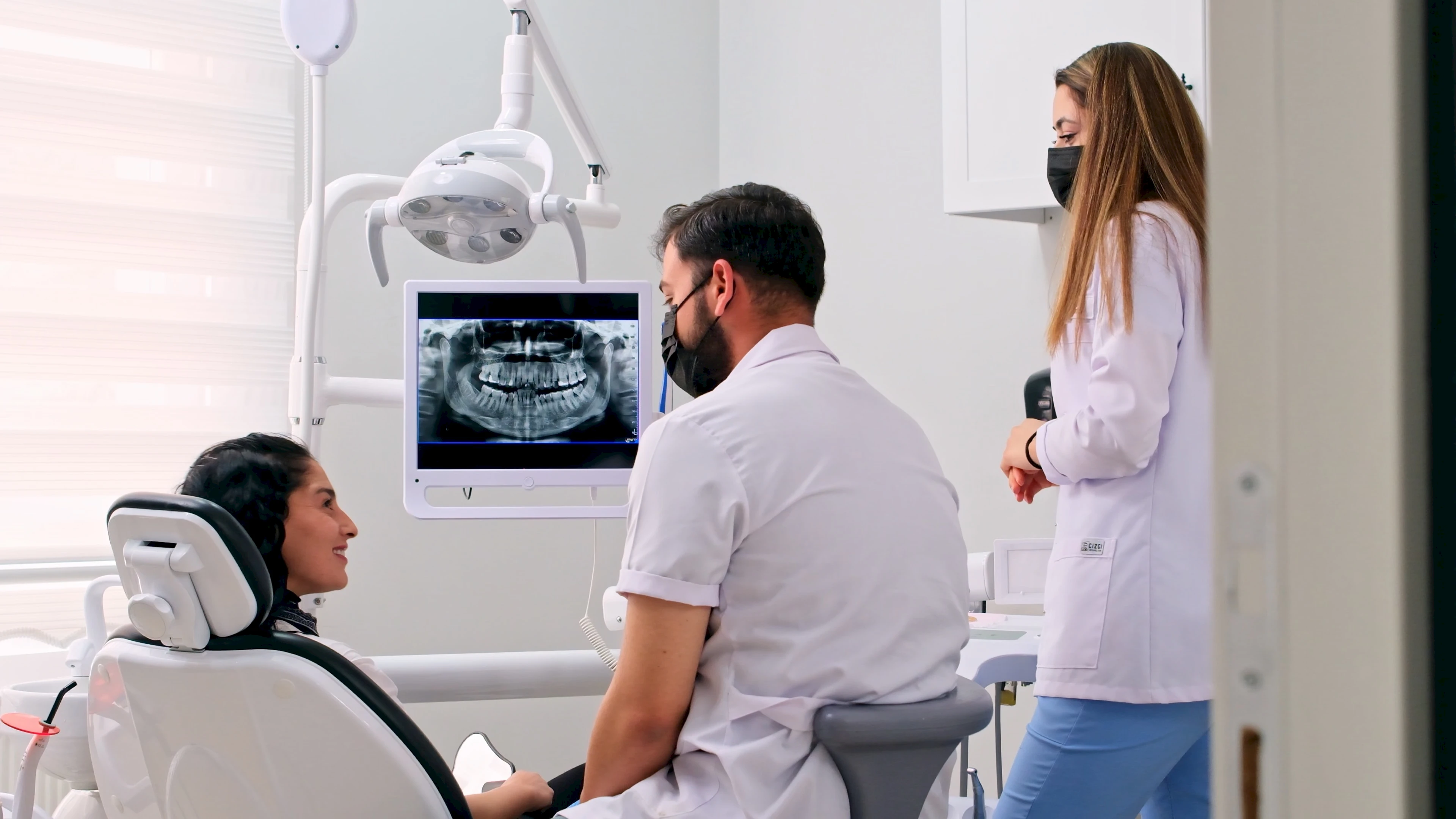
In the chair, the sequence that works is show, tell, do - the child sees the instrument, hears what it does, then it is used. Where a child is genuinely unable to cope, treatment can be provided under sedation, but it is a last resort rather than a shortcut, and most children never need it.

Grinding in Children

Night grinding is common in children, often noisy enough to worry the whole household, and in most cases it resolves on its own as the dentition changes. It is not usually a sign of a problem and rarely needs treatment. What we do check is whether the teeth are wearing measurably, whether the child wakes with jaw discomfort, and whether the bite is contributing. Night guards are seldom appropriate for a growing child, since a fixed appliance interferes with normal jaw development.

Children's Dentistry While Travelling

If your child has toothache during your stay in Kusadasi, contact us the same day - children's pain from a dental abscess escalates faster than an adult's, and it is not something to manage with painkillers until the flight home. A broken front tooth after a fall is also worth seeing immediately: a fragment can often be bonded back if you bring it, and a knocked-out permanent tooth should be kept in milk and brought within the hour.

For planned treatment, allow a first appointment purely for meeting and examining, with treatment on a second day. It costs one extra visit and buys a child who is not frightened.

Why We Do Not Publish Children's Treatment Prices

Because a fluoride varnish appointment, a filling in a baby molar and a pulpotomy with a preformed crown are entirely different pieces of work, and how many teeth are affected is not known until they have been examined. After the examination you receive a written plan listing each tooth.

Children's Dentistry in Kusadasi

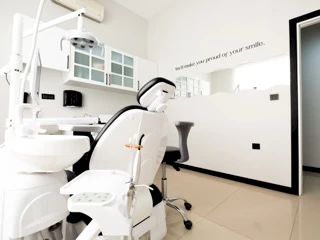
Our clinic is in Cumhuriyet Mahallesi in Kusadasi, with five treatment units and radiographic equipment on site. Your child's first examination is carried out by Tugce Arslan, and first visits are booked with time to spare rather than squeezed between other appointments.

If your child has never seen a dentist and nothing hurts, that is the ideal moment to come - not the exception to it.

The information on this page is general and does not replace a clinical examination. Which treatment a child needs can only be decided after examination.

Frequently Asked Questions

Paediatric Dentistry

At what age should my child first visit the pediatric dentist?

Children should have their first dental visit by their first birthday or within six months of the eruption of their first tooth.

What services do pediatric dentists provide?

Pediatric dentists offer a wide range of services, including dental cleanings, fluoride treatments, dental sealants, cavity treatments, and orthodontic evaluations.

How can I prepare my child for a visit to the pediatric dentist?

Parents can prepare their child by talking positively about the dentist, reading books about dental visits, and explaining what to expect during the appointment.

What are the benefits of pediatric dentistry for my child?

Pediatric dentistry promotes early detection and treatment of dental issues, instills good oral hygiene habits, and ensures a positive dental experience for children, setting the foundation for lifelong dental health.

How often should my child visit the pediatric dentist?

Children should visit the pediatric dentist every six months for routine check-ups and cleanings to maintain optimal oral health.

What if my child is anxious about visiting the dentist?

Pediatric dentists are trained to provide a supportive and comforting environment for anxious children, employing techniques such as positive reinforcement and distraction to ease their fears.

When Should My Child See a Pediatric Dentist?

The American Academy of Pediatric Dentistry recommends a child's first dental visit by their first birthday or within 6 months of their first tooth erupting. Regular checkups and cleanings every 6 months are crucial for monitoring oral development, preventing cavities, and ensuring a healthy smile.

What Services Do Pediatric Dentists Offer?

Pediatric dentists provide a comprehensive range of services tailored to children's needs, including:

  • Infant Oral Health Education: Guiding parents on proper oral hygiene practices for infants and toddlers.
  • Dental Exams & Cleanings: Gentle examinations to check for cavities, gum health, and overall oral development.
  • Fluoride Treatments: Strengthening tooth enamel to prevent cavities.
  • Fillings: Treating cavities to prevent further tooth decay.
  • Habit Counseling: Addressing habits like thumb sucking that can affect oral development.
  • Dental Education: Teaching children good oral hygiene habits in a fun and interactive way.
How Do Pediatric Dentists Create a Positive Dental Experience?

Pediatric dentists understand the unique needs of children. They create a welcoming and comfortable environment with bright colors, engaging toys, and a friendly team. They use gentle techniques, explain procedures in a child-friendly manner, and celebrate milestones in your child's oral health journey.

What are the Benefits of Pediatric Dentistry?

Pediatric dentistry offers numerous benefits for your child's oral health:

  • Early Cavity Detection & Prevention: Early intervention to prevent cavities and future dental problems.
  • Comfortable Dental Care: A positive first dental experience fosters good dental habits for life.
  • Improved Overall Health: Healthy teeth are crucial for proper chewing, speech development, and overall well-being.
  • Increased Confidence: A healthy smile can boost your child's self-esteem and confidence.
How Can I Prepare My Child for Their First Dental Visit?
  • Talk positively about the dentist and dental visits.
  • Read children's books about going to the dentist.
  • Role-play what might happen during the visit.
  • Avoid using negative language about dentists or dental procedures.
What Happens During a Pediatric Dental Visit?

A typical pediatric dental visit involves:

  • A gentle examination of your child's teeth and gums.
  • A cleaning to remove plaque and tartar buildup.
  • Fluoride treatment to strengthen tooth enamel.
  • Age-appropriate dental hygiene instructions.
  • Fun and engaging activities to create a positive experience.

Other Treatments

Appointment

We Will Call You

Leave your name and phone number and we will get back to you shortly.

By submitting this form you accept the processing of your personal data under our Privacy Notice .

YA DA
Call Now+90 501 054 92 99
Get A Free Quote